Types of strap-on harnesses: styles, fit and what suits you
Harnesses are a reliable way to hold a toy steady, and the right type for you is whichever one fits snugly and stays put, so weigh fit and stability well ahead of looks.
Good for
- Jockstrap and brief styles stay stable and comfortable for most bodies
- Adjustable straps cover a wide range of sizes
- Body-safe, washable fabrics and interchangeable O-rings are easy to find
- A well-made harness lasts for years of use
Watch out for
- Cheap thin-strap versions shift during use and dig in
- The O-ring has to match the base of your toy
- Fit takes some trial and error to dial in
The main types are two-strap, jockstrap, brief, thigh and strapless harnesses. Beginners usually do best with a jockstrap or brief style, since both spread pressure across the body, stay stable, and forgive an imperfect fit.
A harness is the piece of gear that holds a dildo against the body and keeps it steady during pegging. The type you pick changes how stable it feels, how comfortable it stays over a longer session, and how easy it is to get on and clean. Most people do best starting with a jockstrap or brief style, because they spread pressure across the body and stay put. This is a guide to the categories, not a pitch for any single product.
What a harness actually does
Every harness has the same job. It anchors a toy at the hips through an opening, usually an O-ring, so the wearer can move without the toy shifting or slipping out. Beyond that shared purpose, the styles differ in shape, coverage, and how the straps route around the body. Those differences are what you are really choosing between, so it helps to know them before you read a single product page.
The main types
Two-strap harnesses have a band at the waist and a strap running down each side of the buttocks. They adjust easily and turn up everywhere, though thinner versions tend to wander during use and can dig in. Jockstrap-style harnesses look like athletic underwear, cover more of the body, and route the straps so pressure spreads out, which most people find steadier and kinder over a long session. Brief or short-style harnesses go further and wear like ordinary underwear, with the ring set into a front panel; they feel discreet, though the built-in ring is sometimes fixed to one size. Thigh harnesses strap a toy to the upper leg instead of the hips, opening up different positions for people who find hip harnesses awkward. There is also the strapless option, a toy the wearer holds internally with no straps at all, covered in the strapless strap-ons guide.
Who each type suits
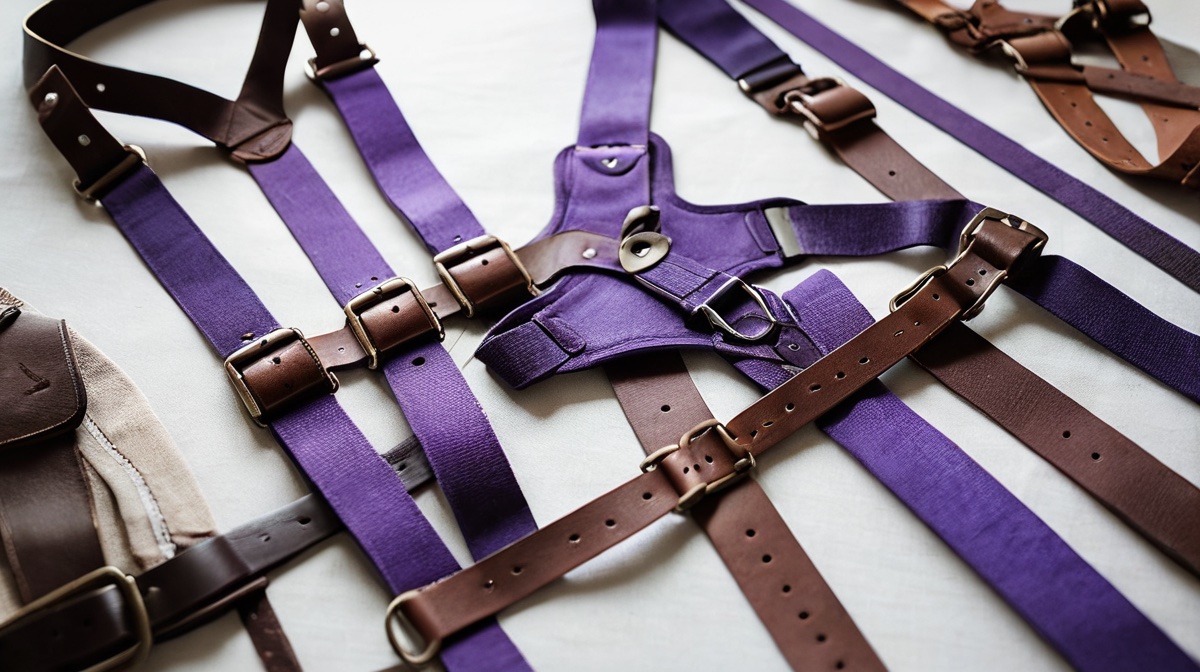
Beginners are usually happiest with a jockstrap or brief style. Both forgive an imperfect fit and stay stable without much fiddling, so you spend less time adjusting straps and more time relaxed. People who want quick adjustability across changing sizes often prefer a two-strap harness, as long as it has wide, well-made straps rather than thin cords. Anyone who finds hip pressure uncomfortable can try a thigh harness. And if the idea of straps puts you off entirely, a strapless toy is worth a look, though it asks more of the wearer to keep it in place.
Body-safe materials and hygiene
A harness sits against skin, so material matters. Nylon and neoprene are common, body-safe, hard-wearing and easy to wash, which makes them practical picks. Leather looks and feels lovely but needs more care and cannot be cleaned as freely, so it is a slower choice to live with. Whatever the fabric, check that hardware sits away from the skin and that seams are smooth rather than scratchy. The O-ring should be body-safe too; silicone or rubber rings are gentle and easy to clean. Interchangeable rings are a genuine convenience, since the ring has to match the base of your toy. For what the toy itself should be made of, see the body-safe materials guide.
Getting the fit right

Fit decides almost everything. A harness should sit snug at the hips and stay put when you move, holding the toy firmly. If it slides, you lose control and the session turns into a wrestle with your gear. If it bites, you think about straps instead of your partner. Check the size range before buying, especially at the smaller and larger ends, because many harnesses only fit a middle band of sizes. When it arrives, put it on and move around before any real use, adjusting until it feels stable and easy to forget.
How to choose
Start with fit and stability, then think about style and looks. Match the O-ring to the base of the toy you plan to use. Favour body-safe, washable materials you will actually keep clean. Be wary of very cheap harnesses with thin straps and vague material descriptions, since they shift, dig in and wear out fast. If a seller will not say what a harness is made from or what sizes it fits, look elsewhere. Generic buying links are useful for comparing features, as long as you read the size and material details rather than the marketing. For a deeper walk through a single choice, the how to choose a harness guide goes further; if you are new to all this, start with what is pegging, browse the other gear guides, or see how other people found their footing in the stories.
Questions people ask
Which type of harness is best for beginners?
A jockstrap-style or brief-style harness suits most beginners. Both spread pressure across the body and stay stable without much fiddling, so you spend less time adjusting straps and more time relaxed.
What is the difference between a two-strap and a jockstrap harness?
A two-strap harness has a waist band and a strap down each side of the buttocks, which adjusts easily but can shift on thinner versions. A jockstrap style covers more of the body and spreads pressure out, which most people find steadier.
Do all harnesses fit every dildo?
No. The toy has to have a flared base, and that base must match the harness O-ring. Measure the base of your toy and check it against the ring sizes, since many harnesses come with two or three interchangeable rings.
Still weighing it up?
Fit and comfort are personal, and other people will tell you the parts a spec sheet leaves out. Ask before you buy.
Find people who use it →